· The Tokatab Team · Tips and tricks to learn piano · 7 min to read
5 Reasons to Learn How to Play Für Elise
Für Elise is a classic, one of the most famous pieces in the piano repertoire. Why does this piece remain an essential part of piano learning?
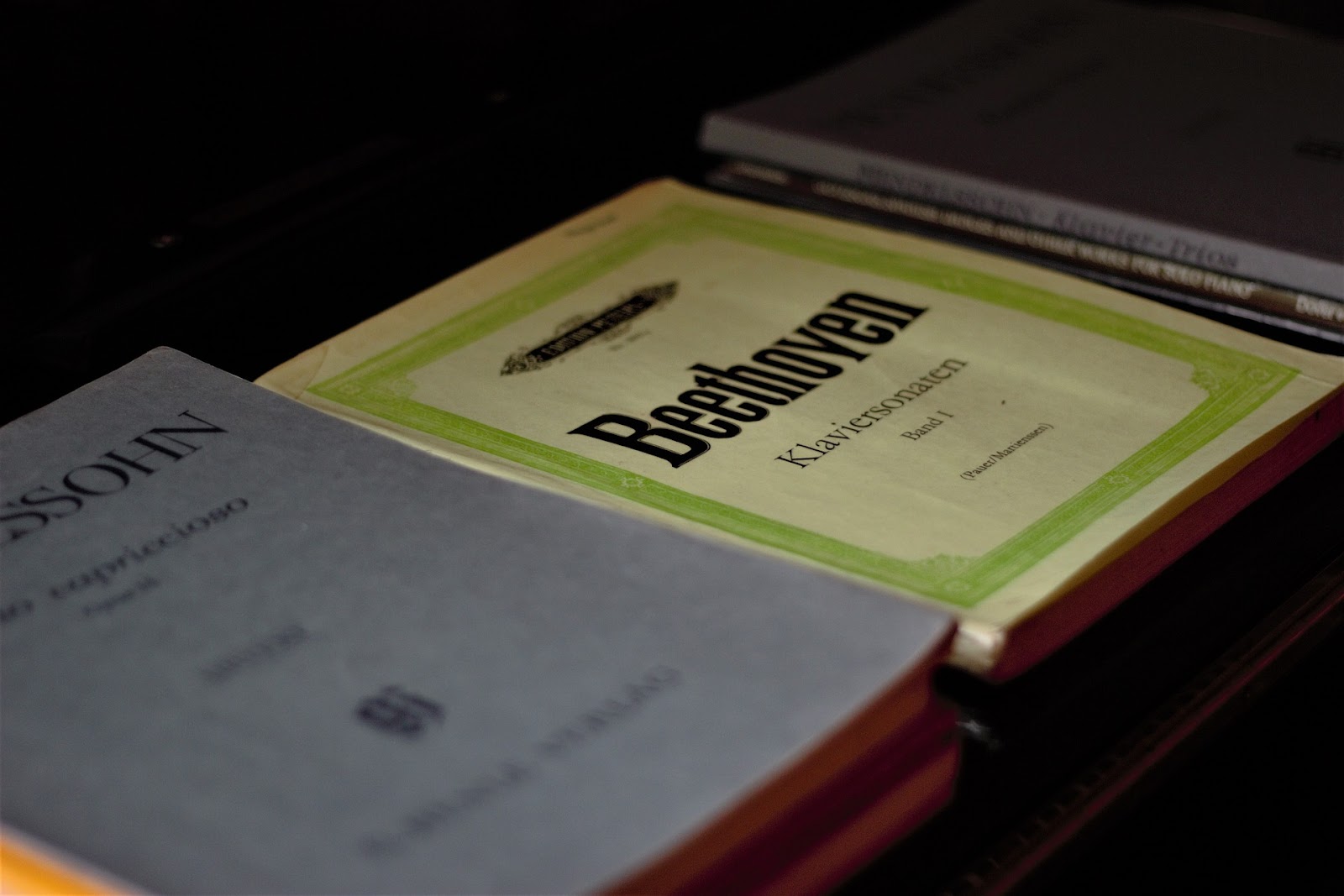
It’s One of the Most Famous Piano Pieces
Playing Für Elise on piano means playing a piece that is unquestionably one of the most famous melodies in the piano repertoire. This iconic composition by Ludwig van Beethoven has become emblematic of classical music, to the point of being an integral part of popular musical culture. Since its creation in 1810, this melody has managed to transcend eras and borders, touching all generations around the world.
Its charm lies in the simplicity of its notes and the emotion it conveys. The delicacy of the melody immediately captures the ear, while the subtlety of the nuances expresses an emotional depth that speaks to the listener’s soul.
Due to its popularity, some might claim that it is overused, too often heard and present everywhere, even in the hold music of some phone systems. Yet, even with this overexposure, the appeal of this composition is still there for the majority of amateur pianists or future pianists. The beauty of Für Elise lies in its ability to suggest images, memories and references thus allowing everyone to immerse themselves in its sonic universe.
It has inspired many pianists, amateurs but also professionals. Each has brought their own style, their touch, their interpretation, which has allowed and still allows Für Elise to be a constantly evolving work. Some great artists have decided to include it in their recordings, thus contributing to enriching the discography of this classical piece.
We think for example of Lang Lang, famous pianist, who is no exception to this enthusiasm. As a passionate performer, he chose to play Für Elise on piano in one of his latest albums, highlighting the complexity of interpreting this piece well to successfully express its emotional richness and complexity. With his virtuoso talent, it seems to us that Lang Lang has managed to bring a new dimension to this composition.
In short, Für Elise remains a landmark work that continues to occupy a special place in the hearts of many classical music enthusiasts and beyond! Whether played by great pianists on the world’s greatest stages, by passionate amateurs in the intimacy of their home, or on a train station piano, Für Elise continues to move and charm the souls of all who listen to it.
The First Part is Easy and Useful to Learn for Beginners
All piano teachers use this piece to allow their students to progress and quickly learn a known piece. In any case, it’s often about learning the first part, Für Elise having three parts.
Indeed, learning to play the first part of Für Elise is very accessible to beginner pianists. Working on the first part of Für Elise offers many advantages for the development of piano technique and hand coordination. First of all, this section contains repetitive patterns and short musical phrases, which allows beginner pianists to strengthen their agility and precision in finger movements and to easily remember the parts to learn.
The notes are relatively simple and well spaced, which promotes a gradual approach to locating notes on the keyboard. This helps beginners become familiar with the different registers of the piano.
The first part of Für Elise also presents dynamic changes and subtle nuances, which encourages students to develop their musical sensitivity and explore expressiveness in their playing. Working on these variations in volume and intensity strengthens their ability to convey emotions through music.
Finally, playing this part requires coordination of both hands, as they play distinct melodies and harmonies at the same time, but in a rather simple way, because often the hands play alternately. This therefore stimulates bimanual coordination in gestures that are easy to understand and feel and helps pianists begin to develop their independence between the right hand and left hand.
In summary, working on the first part of Für Elise is an excellent exercise for beginner pianists, as it helps them improve their finger agility, musical sensitivity and hand coordination. It’s a rewarding piece to learn, which paves the way towards better piano mastery and allows a playful approach to classical music.
Playing Music by a Great Composer
Für Elise is one of the most emblematic and memorable musical compositions by Ludwig van Beethoven, one of the greatest composers of the classical period. This work was written in 1810. Beethoven, a musical genius, created this piece with extraordinary sensitivity and expressiveness that transcend eras and cultures.
The melody of Für Elise reflects the essence of Beethoven’s unique style. With his ability to express deep and universal emotions, this composition is a testament to his genius.
Beethoven’s music, including Für Elise, has greatly influenced the development of classical music and continues to inspire modern composers and musicians. His musical legacy remains invaluable, and his compositions continue to fascinate present and future generations of piano fans.
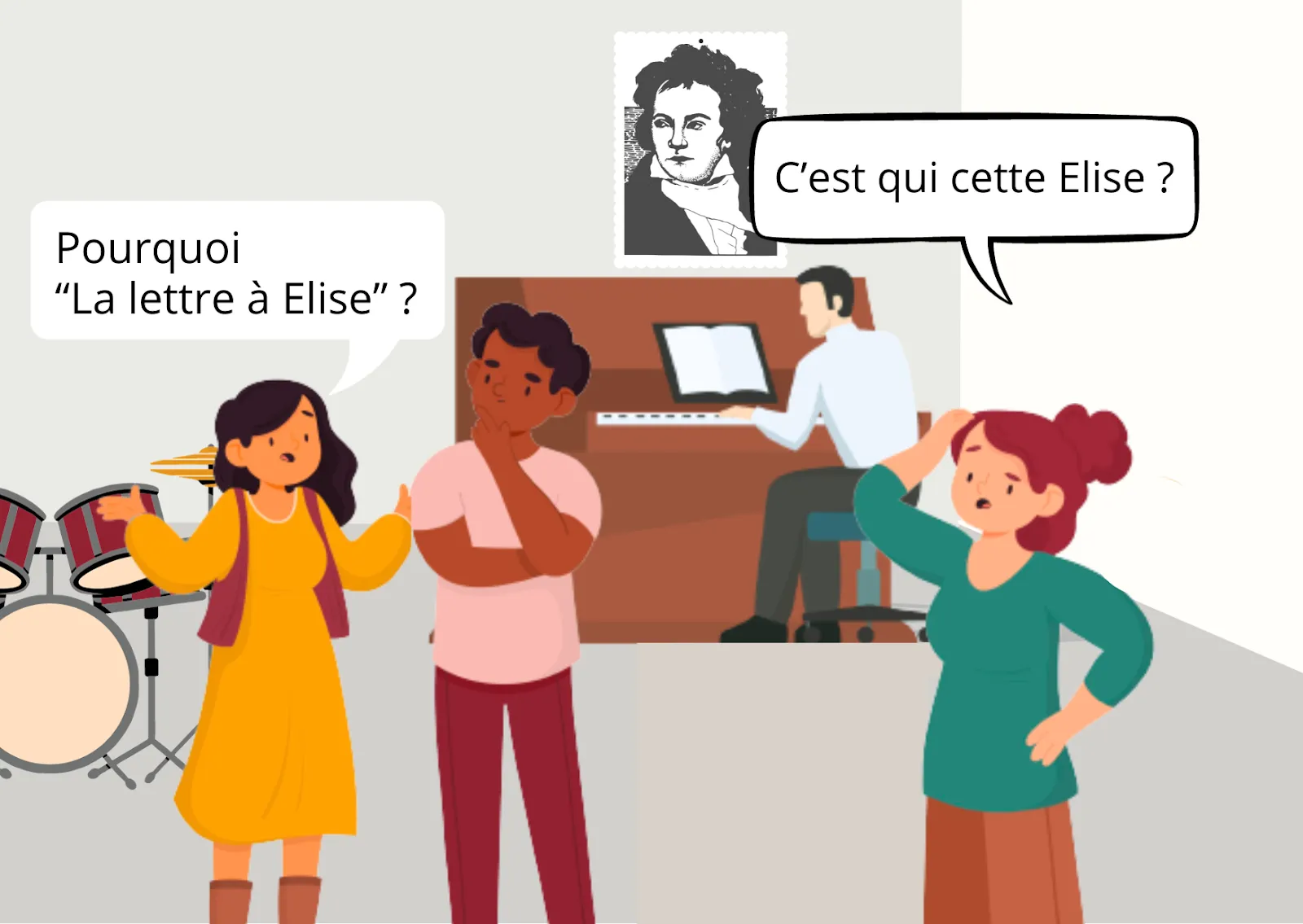
Unfortunately, the identity of the person to whom Beethoven dedicated this piece is not clearly established. Several theories and speculations have circulated over the years, but none have been conclusively confirmed by musicologists. Some have suggested that “Elise” could refer to Elisabeth Röckel, a singer friend of Beethoven. Others think it could be a transcription error and that the original title was “Für Therese” in honor of Therese Malfatti von Rohrenbach zu Dezza, a woman for whom Beethoven had romantic feelings. Unfortunately for him, feelings that were not reciprocated…
In the end, we don’t know for sure for whom Beethoven composed this piece…
Impress Your Audience (Especially If You Play It in Full)
While the first part of Für Elise is accessible to piano beginners, the second and third parts constitute a real challenge for beginner pianists, due to their gestural complexity. After the bewitching sweetness of the first part, these sections reveal technical, demanding movements, which require agility and precision. Which therefore require already having a certain level.
The second part, with its rapid arpeggios and chords, requires quick and fluid gestures to achieve harmonious execution. Dynamic and tempo changes add to the difficulty of capturing the emotional essence of this section. The placement of melody notes in the right hand is not obvious compared to the left hand. Here, you need to have much better hand independence than in the first part.
As for the third part, it presents important interval jumps and tonality variations that require skillful coordination between the hands. Chord melodies in the right hand. Large chords with many notes in the right hand as well as arpeggios covering the entire piano.
However, despite their complexity, these parts offer a valuable opportunity for pianists to perfect their technique and develop their ease. Learning these sections requires patience, perseverance and regular practice of specific gestures.

Once mastered, the second and third parts of Für Elise allow conveying all the emotional richness, but above all the virtuosity of this emblematic composition by Beethoven. The effort deployed to play them with ease is rewarded by the satisfaction of being able to play parts of this piece unknown to the general public and therefore to surprise your audience!
We Find Many Resources on the Internet to Learn It
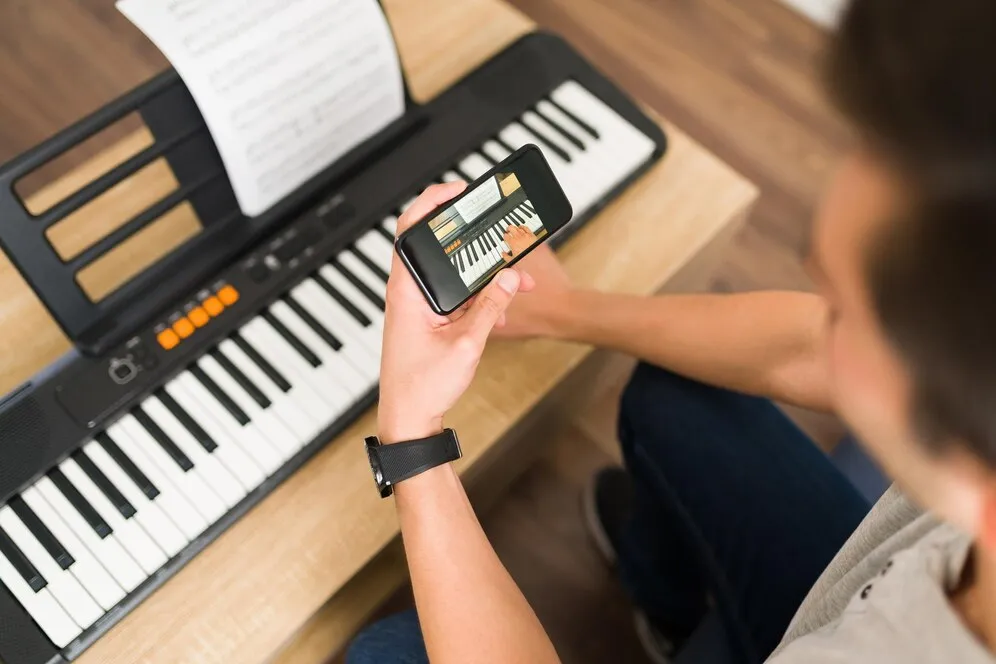
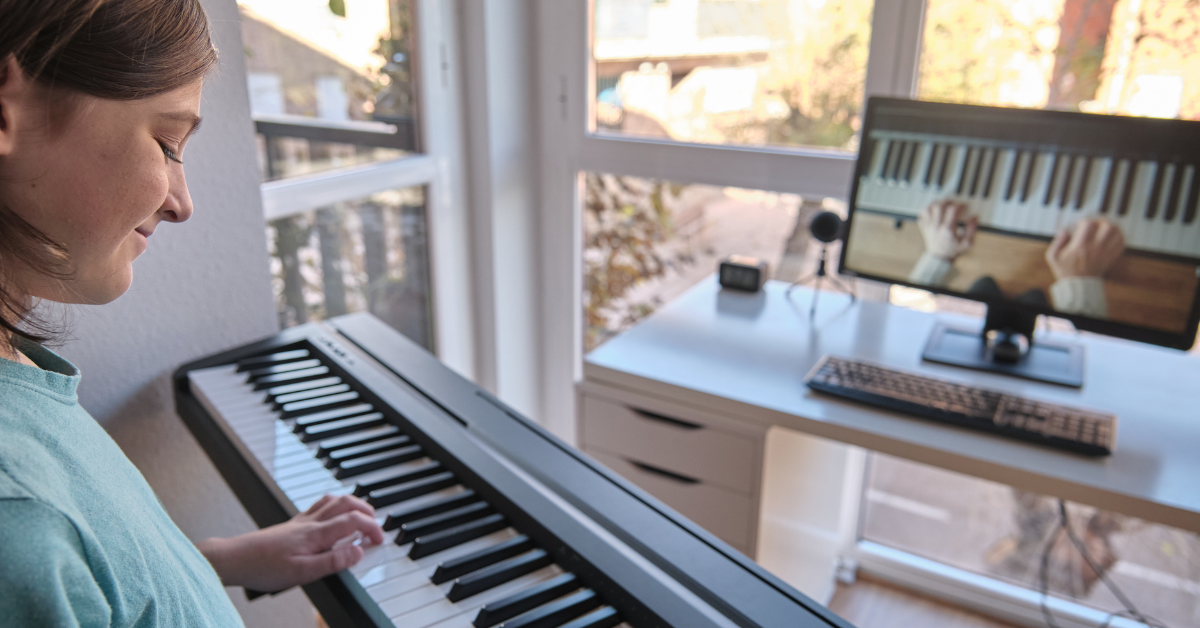
The Internet is full of resources to learn how to play Für Elise on piano. You can easily find free sheet music online or on YouTube there are a multitude of video tutorials that detail the gestures and fingerings to play it.
Among certain videos, tutorials are offered by experienced pianists who generously share their knowledge. However, beware of videos offered by amateurs who are not professionals and who may make you learn errors or tutorials that do not contain fingerings. Using the correct fingers is very important to learn Für Elise well and in general to learn to play piano well!
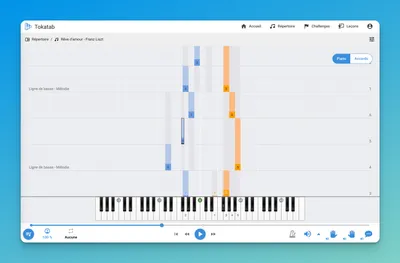
How to learn Für Elise, without managing on your own with video tutorials or sheet music? Tokatab is there to offer you an interactive and personalized learning experience. The app will accompany you step by step in learning the first part of this piece, the most played and most famous, guiding you precisely so you can learn it correctly.
Thanks to Tokatab, you can progress at your own pace and benefit from personalized monitoring to correct your mistakes and improve your playing. Interactive lessons, targeted exercises and teacher advice are at your disposal to help you master Für Elise effectively.