· The Tokatab Team · Tips and tricks to learn piano · 8 min to read
How Much Does Learning Piano Cost?
How much does learning piano really cost? We tell you everything, from the piano to lessons, to master the instrument without breaking the bank.
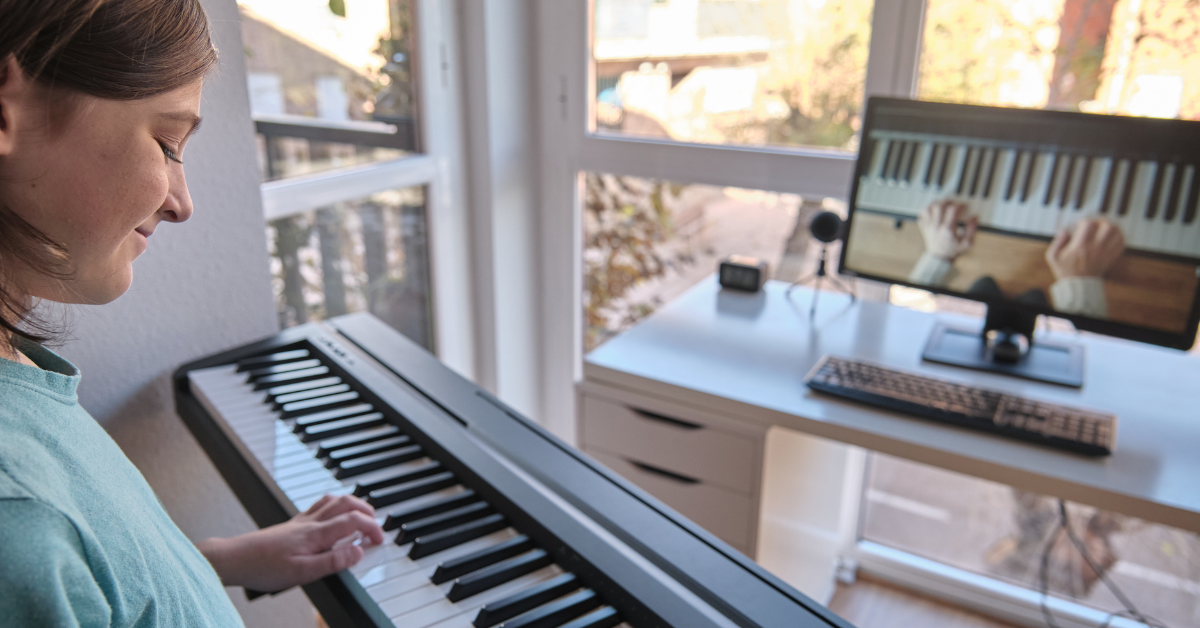
You’re considering learning piano and wondering how much it might cost? Overall, three costs need to be considered for learning, with a budget that can vary enormously, from €300 per year to more than €2,000.
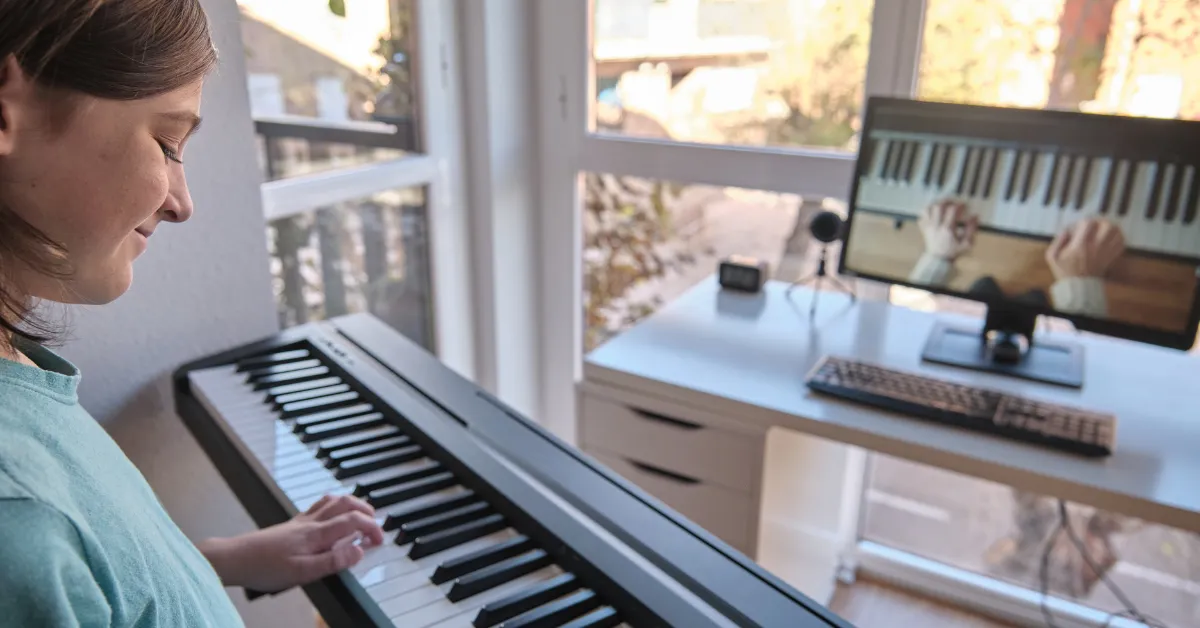
1. First Cost: Getting a Piano!
A. Buying a New Piano: An Investment for Enthusiasts but Also for Beginners
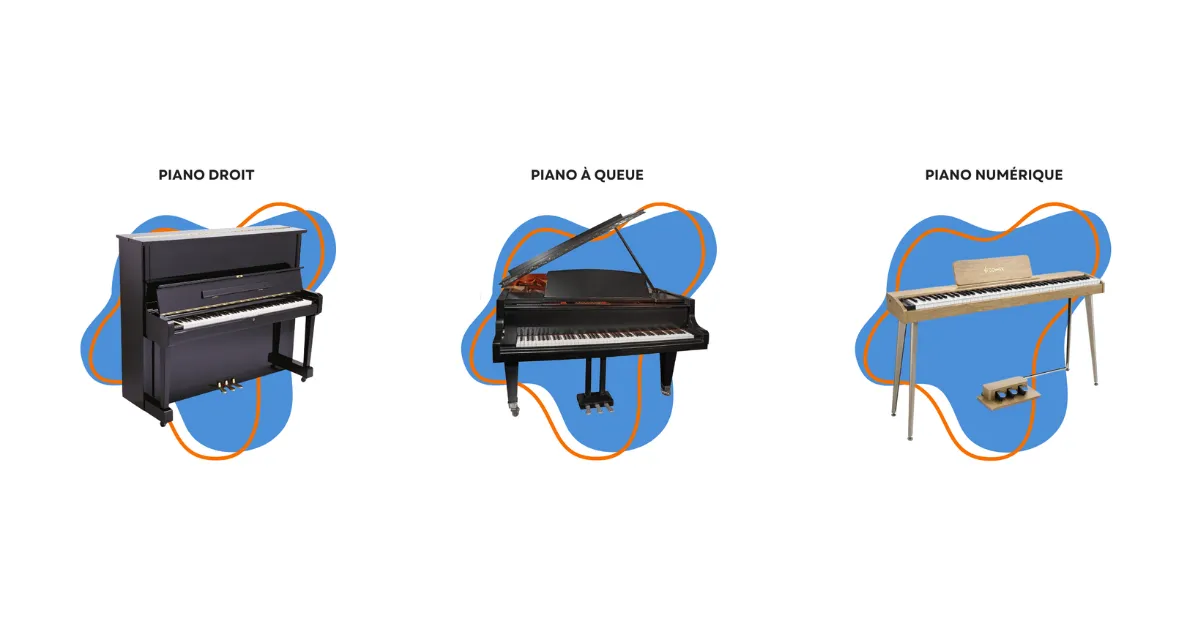
If you’re aiming for a new piano, you’ll find three main categories: upright pianos, grand pianos, and digital pianos. Prices vary enormously depending on the brand, model, and type of piano.
- New upright pianos: Perfect for an optimal musical experience, prices start from €3,000 for a study model, but can reach more than €10,000 for prestigious brands.
- New grand pianos: If you have the space and budget, a new grand piano can cost between €10,000 and €100,000, or even more for a Steinway or a Bösendorfer.
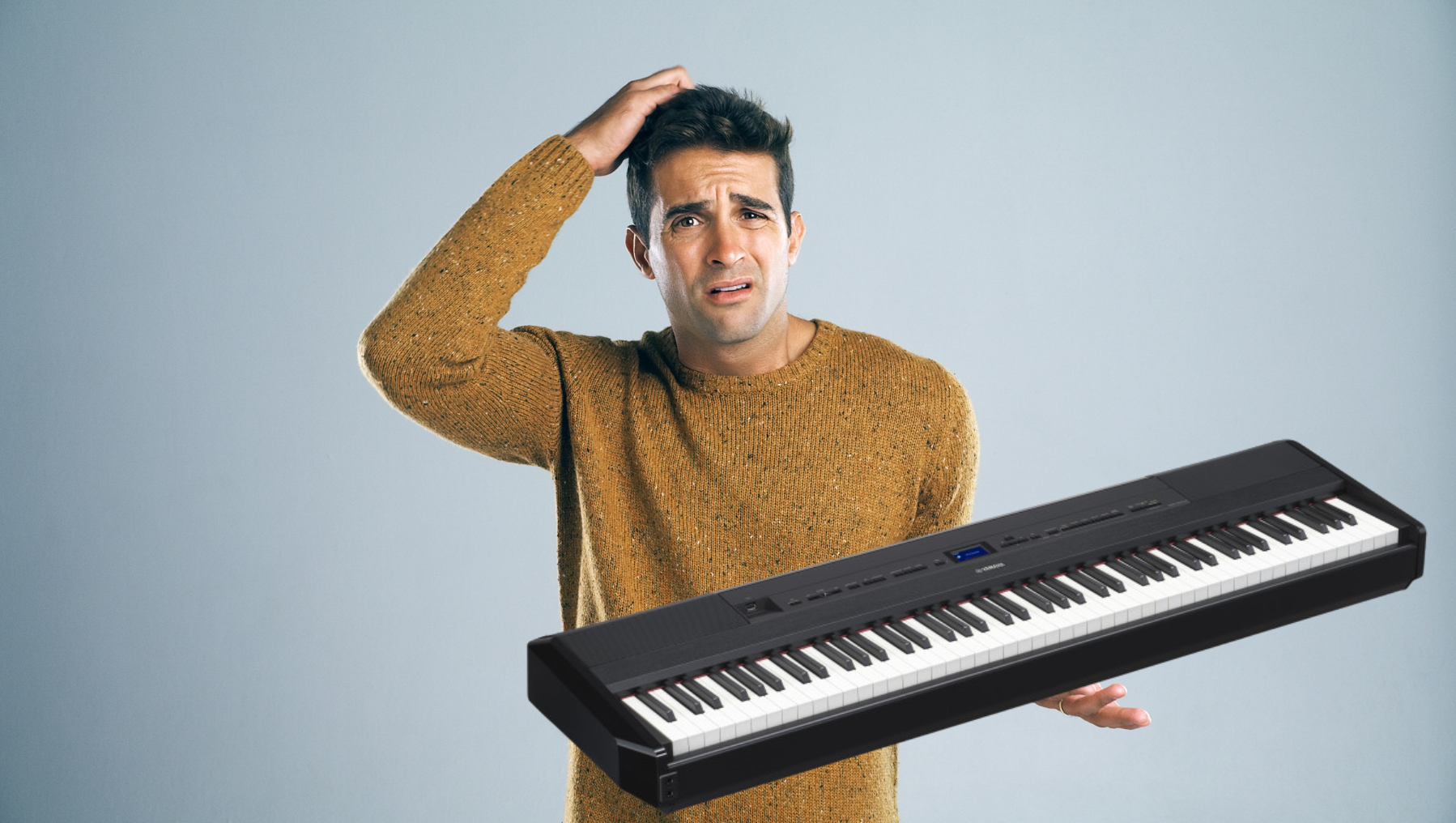
- New digital pianos: A more affordable option, especially for beginners. Entry-level models start from €350, with advanced features going up to €2,000 and more.
Looking for an affordable digital piano? Here are our 4 best recommendations for 2024
B. Buying a Used Piano: The Art of the Good Deal
Where to Buy Used Pianos?
Several channels will allow you to buy used pianos:
Piano stores and repair shops: These professionals generally offer new pianos as well as used pianos. The advantage is that these pianos are often serviced, guaranteed, and transport is included in the sale price.
Specialized sites: Platforms such as Greenmusician.com (a French site created by music enthusiasts) offer used digital pianos among other instruments. These sites have many advantages, including delivery.
Peer-to-peer purchase sites: You’ll find hundreds of listings from professionals and individuals selling used pianos. However, be careful, as individuals often tend to overestimate the value of their piano when it’s worn. It’s possible to find good deals, but choosing can be difficult.
What Budget to Plan for a Used Piano?
- Used upright pianos: Good deals start from €1,000. However, for a recognized brand instrument in good condition, expect to spend between €2,000 and €5,000.
- Used grand pianos: Prices fluctuate considerably depending on the age and condition of the instrument. The most worn models can be acquired for less than €5,000, while iconic pianos from major brands, in perfect condition, can cost more than €50,000.
- Used digital pianos: It’s often possible to find instruments with weighted touch and 88 keys, similar to an acoustic piano, for around €200 when buying from individuals. However, it’s crucial to remain vigilant about several aspects of the purchase, as mentioned previously. For more information, check out these two articles that will guide you in purchasing a used digital piano:
- Buying a Used Piano: 5 Questions to Ask the Seller Before Visiting
- 6 Points to Check on a Digital Piano Before Buying It Used
What to Choose Between a New or Used Piano? If you’re looking to easily resell your instrument and limit risks, buying a new digital piano is often a good option, especially for beginners.
New acoustic pianos often suffer from steep depreciation, which often makes their purchase more interesting when used. On the other hand, used acoustic pianos, especially if well-maintained, hold their value well.
Finally, for used pianos, transport and maintenance costs count and are often added to the purchase price.
C. Renting a Piano: A Practical and Economical Solution for the Undecided!
Piano rental is an excellent alternative for those who hesitate to immediately invest in buying a piano. Here are the main advantages:
- Reduced costs: Rental eliminates the need for a high initial payment. Monthly fees, often affordable, generally vary between €30 and €100 depending on the model and quality of the piano.
- Quality and choice: Stores offer a wide range of pianos, from study models to concert pianos, allowing renters to try different instruments without a major financial commitment.
- Flexibility and maintenance: Ideal for those testing their musical interests or who have temporary needs, maintenance is generally included, ensuring the piano remains in excellent condition without additional costs.
- Purchase option: Many rental contracts allow rent paid to be converted into credit towards purchasing the piano.
In conclusion, piano rental can be a wise option to access a quality instrument while maintaining financial flexibility and without committing to an immediate purchase.
2. Second Important Cost: The Learning Support
When you have the piano in your home, another choice involving costs becomes key: how to learn?
A. Taking Piano Lessons with a Private Teacher
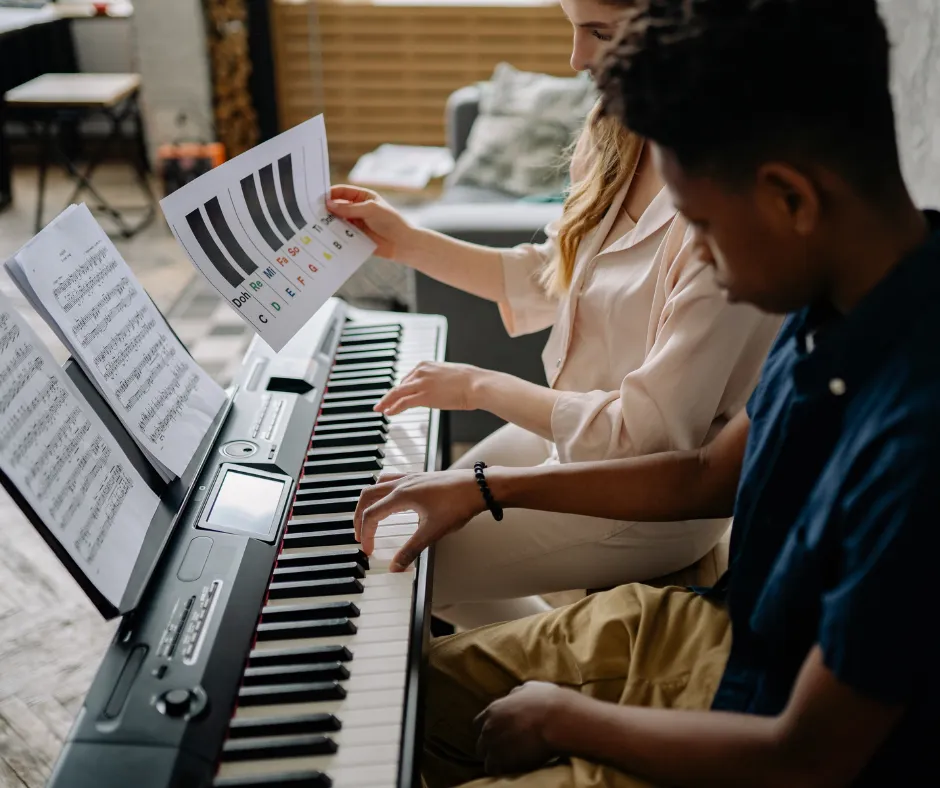
Outside of Paris, in smaller cities or rural areas, rates are generally lower, reflecting a lower cost of living and different competition.
Beginner or student teachers: Rates often start around €20 per hour and go up to €50 per hour in large metropolitan areas.
Experienced teachers: You can find certified teachers for rates ranging between €35 and €80 per hour depending on your location.
Concert pianists or highly qualified teachers: Often “à la carte”.
B. Taking Piano Lessons at a Music School
You’ll learn to play piano, but often you’ll also have music theory classes, choir, workshops, end-of-year recitals… This also represents a bit more constraints as you need to travel and adapt your schedule to available time slots.
Two types of structures stand out:
- Municipal music schools and conservatories: The teachers who teach there are often civil servants and therefore have musician and teaching diplomas. They are often very good. In terms of budget, the rate in these structures is mostly indexed to your family quotient. It therefore depends on your resources. It’s often a very good ratio between cost and learning quality, but unfortunately, places are increasingly rare!
- Private and associative music schools: They have the same advantages, but the teachers who teach there are not always as qualified as teachers in municipal schools, because they are not civil servants and therefore are not required to have state diplomas. Benefiting from fewer subsidies, these schools are also often more expensive and cost between €1,000 and €2,000 per year.
C. Learning Piano with Videos: An Option to Evaluate Carefully
Today, learning piano via videos is a tempting option, with free solutions like YouTube or paid course packages. However, while convenient, this method has drawbacks. Let’s review the different possibilities.
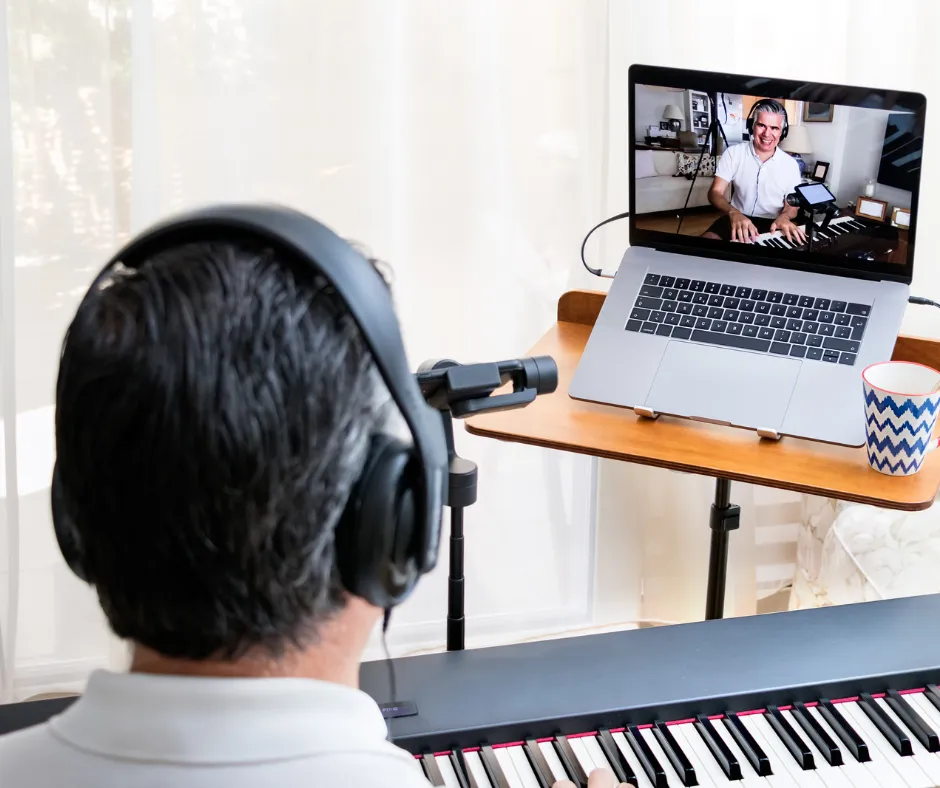
- YouTube: Free but Not Suitable, Especially for Beginners On YouTube, access to thousands of educational videos is completely free. However, this abundance can quickly become a maze, especially for beginners! It’s difficult to know where to start, which lessons to follow, and how to structure your learning.
- Video “Package” Methods: Often Overpriced! Many successful pianists and YouTubers offer their own courses in the form of paid video “packages”. These methods are more structured, but they can be very expensive. The price of a complete package can easily reach between €300 to €500, generally payable in one go.
D. Learning Piano with Applications: The Digital Piano Revolution for an Affordable Cost
Piano learning has been transformed by the evolution of digital technologies, with applications offering a modern and interactive approach, often more affordable than traditional methods or videos.
Advantages:
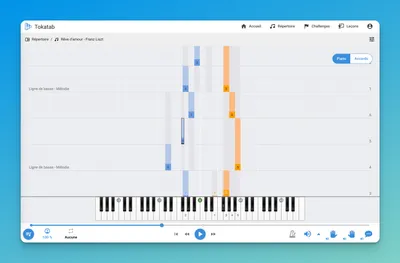
- Interactivity: Unlike videos, many applications provide real-time feedback, using technologies that listen to your playing and immediately indicate errors, a crucial asset for effective learning.
- Flexibility: Applications allow you to practice anytime and anywhere, as long as you have a keyboard and internet connection.
- Structure: Lessons are well-organized and offer a progressive learning path, guiding beginners from basic gestures to advanced techniques.
Limitations:
- Uniformity of the learning path
- Absence of direct feedback
3. Tokatab, the Alternative for Less Than €10 per Month!
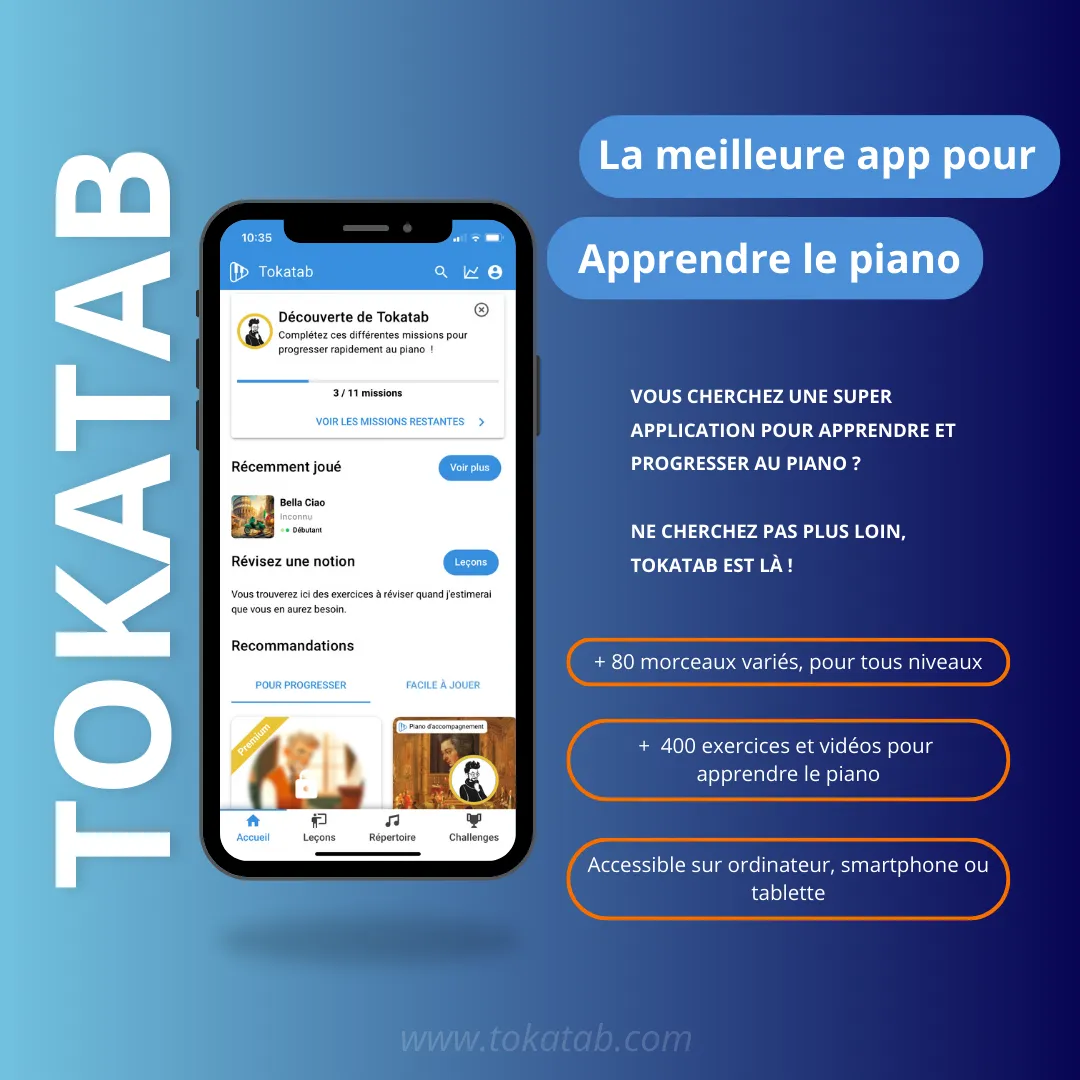
For those who don’t have the opportunity to learn with a teacher in person but still want to benefit from personalized learning, Tokatab is the ideal solution!
Unlike the majority of applications, Tokatab stands out with its advanced intelligence, capable of precisely understanding each user’s level and skills at the piano. Thanks to this unique pianistic profiling, the application offers a virtual piano teacher who adapts lessons and advice according to your acquired skills, needs, and goals, while taking into account your personal preferences.
With Tokatab, it’s not up to you to adapt to the application, but rather the application that adapts to you. Each path is custom-designed to guarantee optimal progress while respecting your pace and expectations.
And that’s not all! In addition to offering one of the best learning experiences on the market, Tokatab offers very attractive rates: from only €9.90 per month. You can even try the application for free thanks to the 5 pieces offered in the free plan.
4. Conclusion: Everyone Can Find Their Shoe… or Rather, Piano for Their Hand!
Whether you want to learn piano with a teacher, via videos, books, or applications, there are solutions for all budgets and all levels of expertise. Learning piano can range from €0 to several thousand euros per year, depending on the choices you make in terms of equipment, learning support, and accompaniment.
But the important thing is to get started! Whether with a used piano, trying instruments in stores, or subscribing to an application like Tokatab that offers personalized and evolving teaching for less than €10 per month, you have the opportunity to discover the pleasure of playing, at your own pace and according to your desires.
So, no more excuses: it’s time to start or continue this magnificent musical journey with Tokatab! 🎶