· The Tokatab Team · Tips and tricks to learn piano · 7 min to read
How Piano Practice Can Improve Your Life
What if playing piano became your secret to improving your daily well-being? Discover how music can transform your life!
Did You Know That Playing Piano Is Much More Than Just a Hobby?
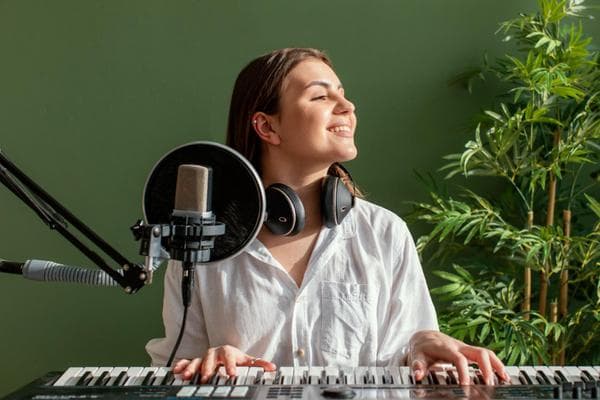
Most people play piano primarily for leisure, but did you know that practicing piano is much more than a simple hobby? Indeed, music therapy exerts a profound power on our mental well-being, it can act as a true therapy for the brain.
During your practice sessions, your brain comes alive and this leads to the activation of several brain regions, thus contributing to the improvement and strengthening of cognitive abilities (according to a study by Eckart Altenmüller, a German doctor and neuroscience researcher). By stimulating these various brain regions, it also regulates our emotions, soothes us, reduces stress and worries.
Learning to Play Piano Reduces Stress and Anxiety
Nowadays, regular piano practice can represent a form of therapy and not just a musical activity. Playing piano allows you to channel emotions and release accumulated tensions. When you sit in front of the keyboard, you enter a bubble of intimacy and forget the outside world.
The concentration required to play each note helps push away negative thoughts, refocus the mind on the present moment and thus turn away from worries and concerns. Music therapy acts as a natural antidote against stress and anxiety, offering a refuge space where mental well-being is favored and where you rediscover a feeling of inner calm.
The benefits of music on mental health are undeniable, it stimulates the production of endorphins, those happiness hormones that generate a feeling of well-being and euphoria. By exploring notes and chords on the piano, you’ll discover a source of comfort and appeasement (a bit like meditation), thus transforming your piano practice into a true therapeutic experience. Music reduces heart rate and blood pressure according to various studies, additional reasons to train daily. Music therapy thus becomes a valuable tool for improving health.
Playing Piano Improves Dexterity and Coordination
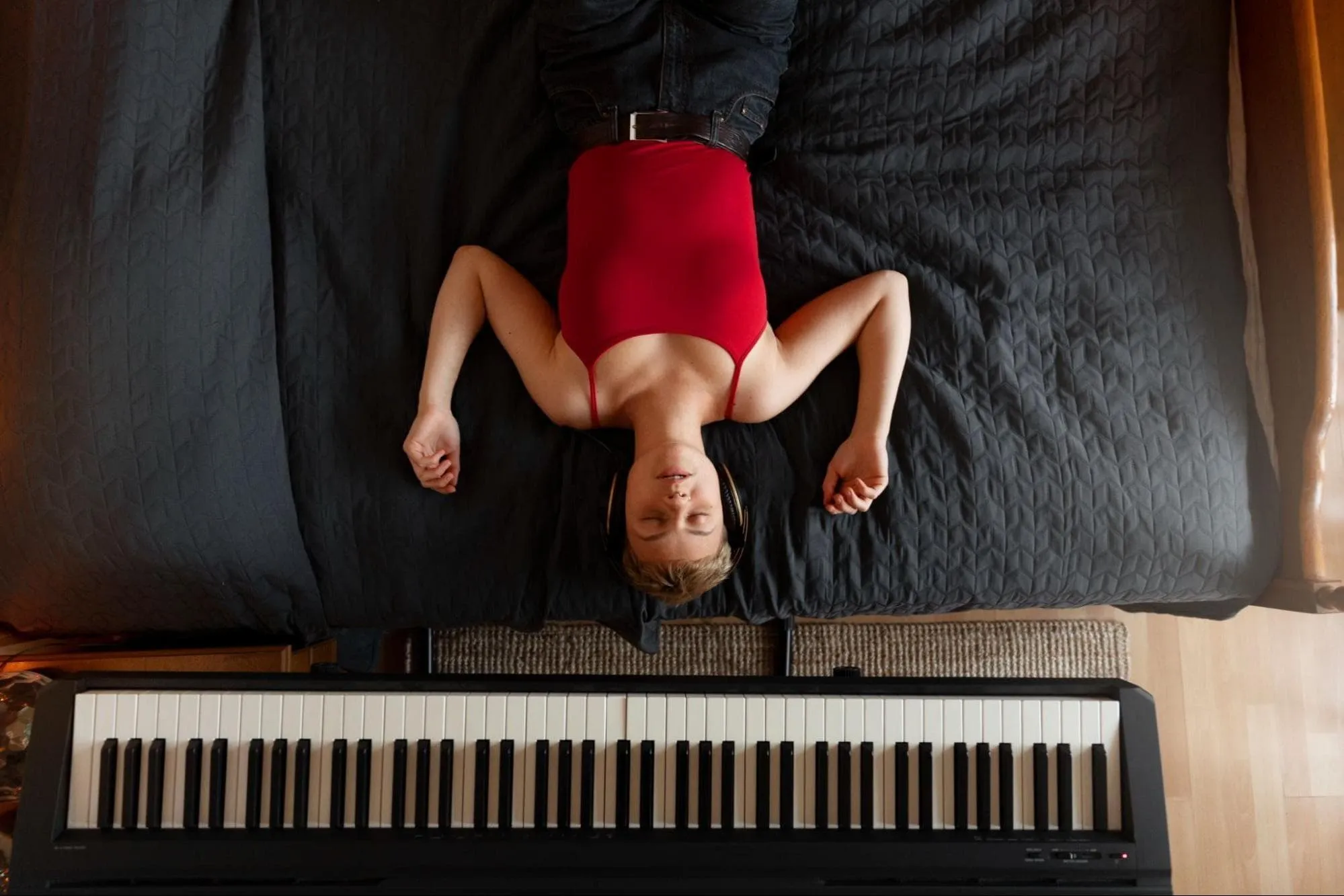
Regular piano practice is not only a musical exploration, it’s also a valuable exercise for improving hand-eye coordination.
At times, your left and right hands must perform totally distinct movements. Your brain must therefore guide each hand in its actions and movements. It’s a real brain workout! The coordination between hands, as well as reading scores, engage and stimulate your brain. This is true not only for traditional staves, but also for the representation methods without music theory adopted by Tokatab, a simplified method that allows beginners to start playing quickly.
By adapting to these new representations, the brain engages in a renewed process of learning and understanding. Pianists thus develop a fine synchronization between their hands and eyes, which translates into a significant improvement in their dexterity and coordination.
This evolution of coordination can also have beneficial effects in other aspects of daily life, such as general motor coordination. Pianists develop better body awareness and more precise coordination, which can improve precision in activities such as sports practice or even daily tasks.
People who have invested time in learning piano have noticed a notable improvement in their coordination and agility, which has allowed them to execute more complex tasks with ease and precision. As explained by Lang Lang, a Chinese virtuoso pianist of international renown (residing in France): “The most difficult aspect in learning piano is knowing how to separate the two hands. That’s how you make both parts of the brain work. After that, it becomes easier but you have to practice a lot!”
Lang Lang’s 8 golden rules for learning to play the piano
Learning to Play Piano Strengthens Discipline and Perseverance
The necessity of playing piano regularly to progress in learning is indisputable. Each playing session represents an opportunity for improvement and consolidation of skills. This discipline required to maintain constant practice can also have positive repercussions in other areas of life, such as work or studies.
Piano practice requires an investment in time and effort. Dedicated pianists often testify to the benefits of regular practice in their daily lives. The perseverance developed in the context of learning piano manifests itself in their determination to overcome obstacles and achieve their goals. The repetitive nature of practice requires critical reflection and attentive listening over a period, good training to integrate into everyday life.
Playing piano consists mainly of repeating movements and passages of a piece to improve technique and precision. On the other hand, interpreting a piece goes beyond simple reproduction of notes, it implies a real expression of emotion and intention. The simple idea of being able one day to interpret the piano piece you’re practicing stimulates your motivation. It develops your patience and strengthens your perseverance, precious qualities when you’re confronted with challenges.
Learning to Play Piano Also Means Learning to Manage Your Time
Learning to play piano also teaches you the art of managing your time productively.
Indeed, even short breaks between two activities can be used for a 20-minute piano session. This approach allows you to integrate piano practice into your busy schedule, without requiring long dedicated time slots. By effectively using these moments of downtime, you develop a temporal discipline that has positive repercussions in all aspects of your life.
Learning to take advantage of each available moment allows you to optimize your schedule and achieve your goals with efficiency. These short sessions of regular practice promote progression in your piano learning, while preserving the balance between your different activities.
Thus, time management becomes a valuable skill acquired through piano practice.
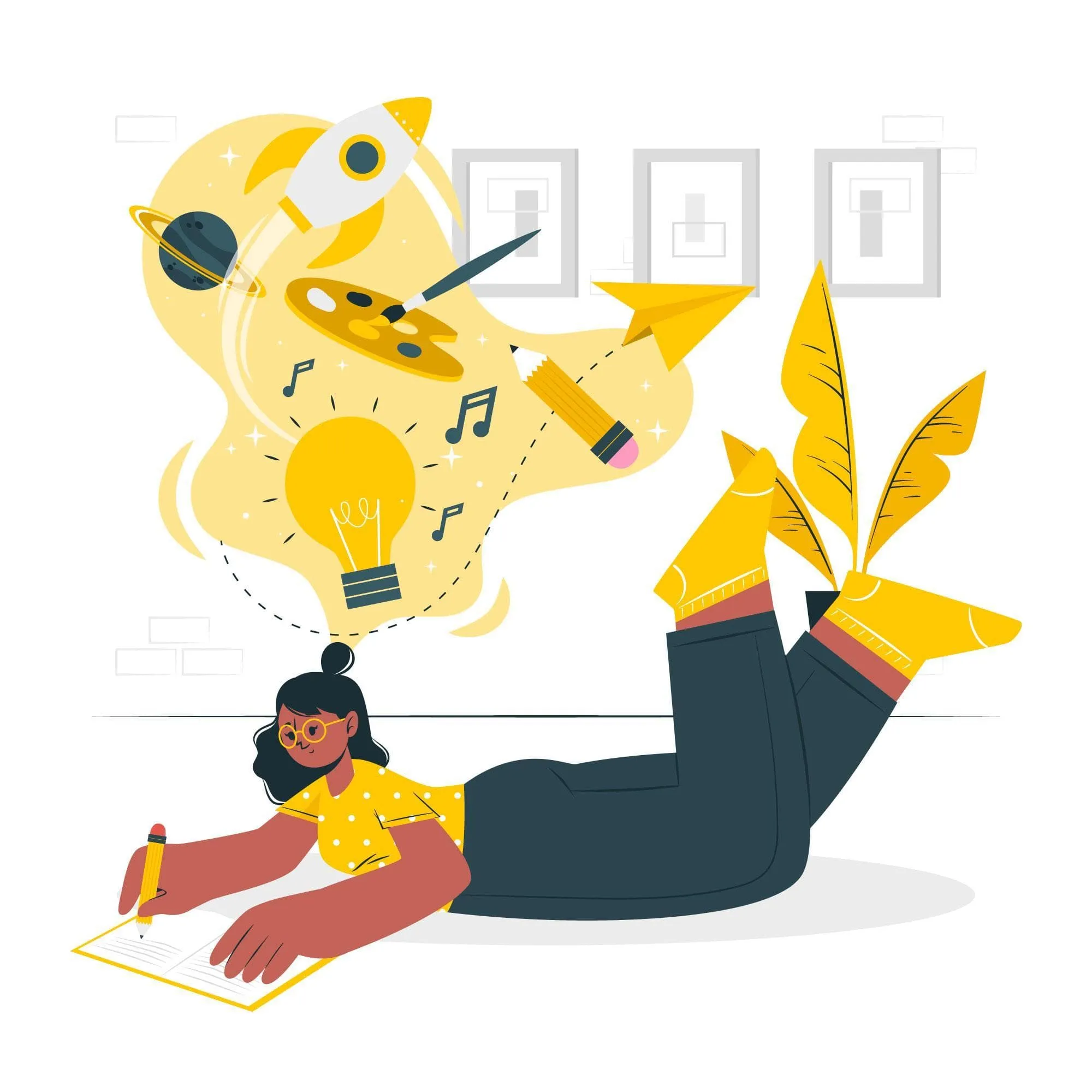
Playing Piano Stimulates Creativity and Personal Expression
Playing piano is much more than reproducing notes written on a score, it’s a form of expression. By exploring the nuances of each piece, pianists have the opportunity to give free rein to their imagination and sensitivity. This artistic freedom also extends to improvisation and composition where musicians can create melodies that reflect their vision and emotions.
For many pianists, playing allows them to let their emotions be released in the notes. It’s a way to communicate feelings without needing words, thus creating an authentic and profound experience both for themselves and for their audience.
Many pianists have found a new form of expression through music, discovering in themselves creative talents they would never have suspected. Whether it’s composing their own pieces or improvising on familiar themes, music becomes a powerful means of communicating and expressing their thoughts, emotions and experiences in an authentic and profound way. Brigitte Bouthinon-Dumas, pianist and author of different piano learning methods said “The hand remains above all the terminal of thought.”
Playing Piano Promotes Sociability and Connection with Others
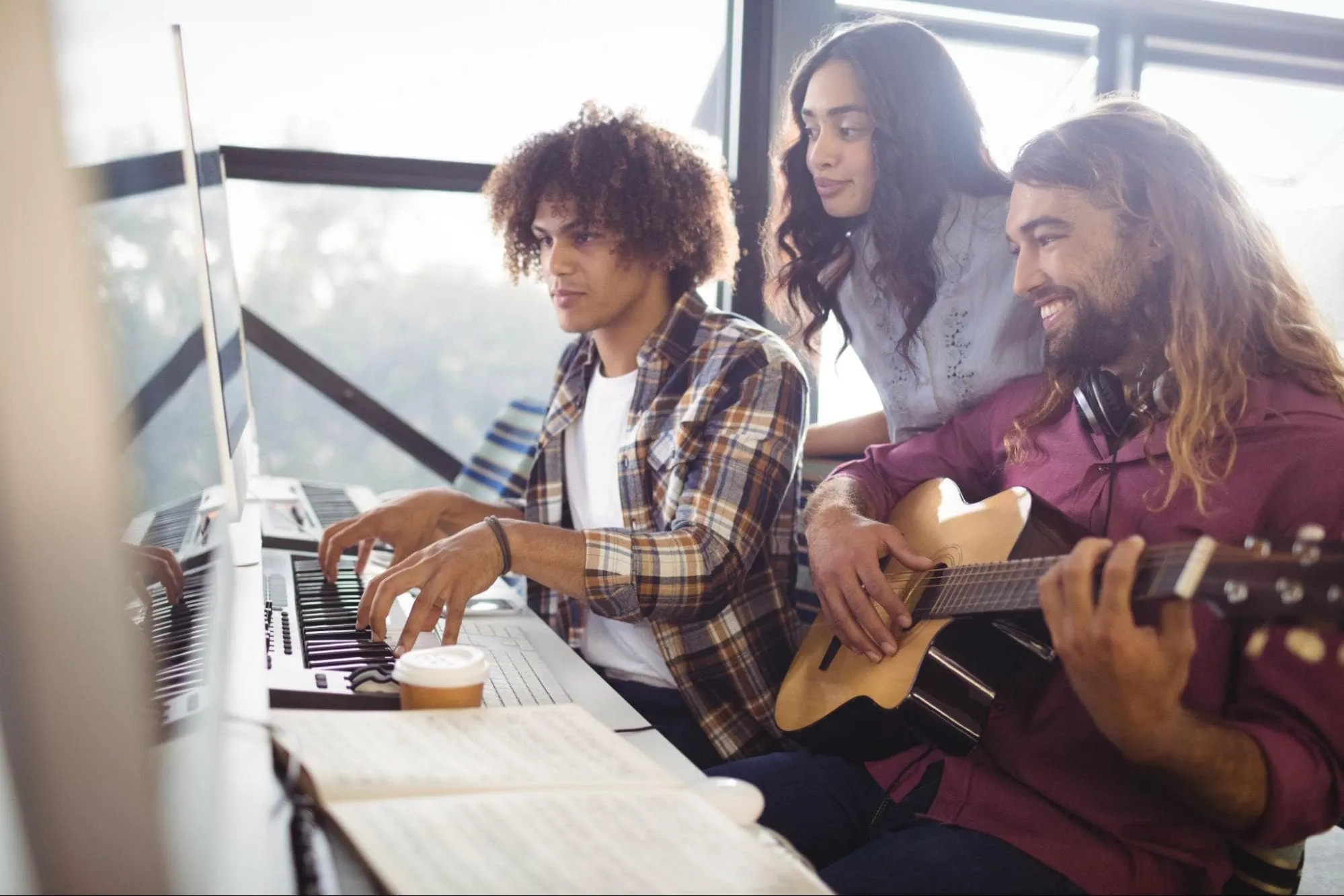
Piano practice in a group or during concerts offers an enriching and rewarding experience. Sharing music with other musicians creates a special bond, based on a common passion. These moments of collaboration promote social interactions, allowing pianists to develop authentic and lasting relationships with other artists.
Music has the power to bring people together, and piano practice is no exception. Playing in a group or during concerts creates an atmosphere of camaraderie and mutual support, thus strengthening the bonds between participants. This shared connection through music creates a true community, where everyone finds their place and role.
In summary, piano practice offers a multitude of benefits that go well beyond simple mastery of an instrument. From stress reduction to improved coordination, through strengthening discipline and stimulating creativity, each moment spent in front of the keyboard brings its share of benefits for body and mind. Music therapy and particularly the benefits of piano are even more numerous, as they also include memory improvement, patience development and also improvement in language learning (also mathematics).
How playing an instrument benefits your brain - Anita Collins
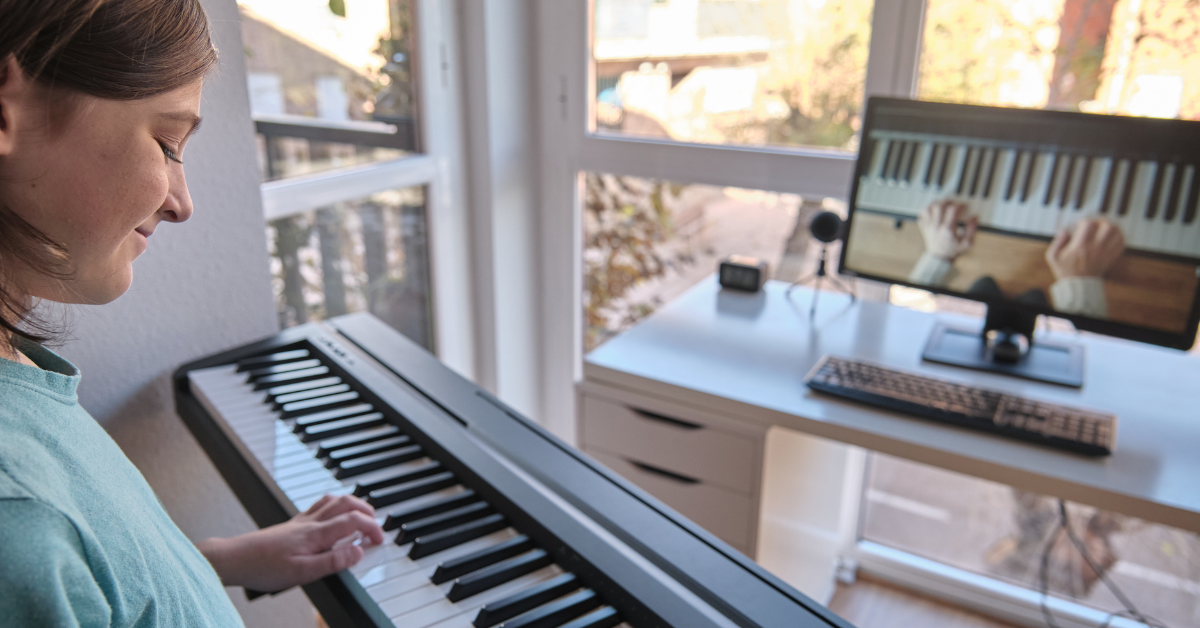
For those who wish to begin their musical adventure, Tokatab is an innovative and accessible solution, offering a piano learning method without music theory adapted to all levels. With Tokatab, you can explore the joys of music at your own pace, guided by interactive lessons and varied pieces.