· The Tokatab Team · Piano Glossary · 2 min to read
Key Signatures
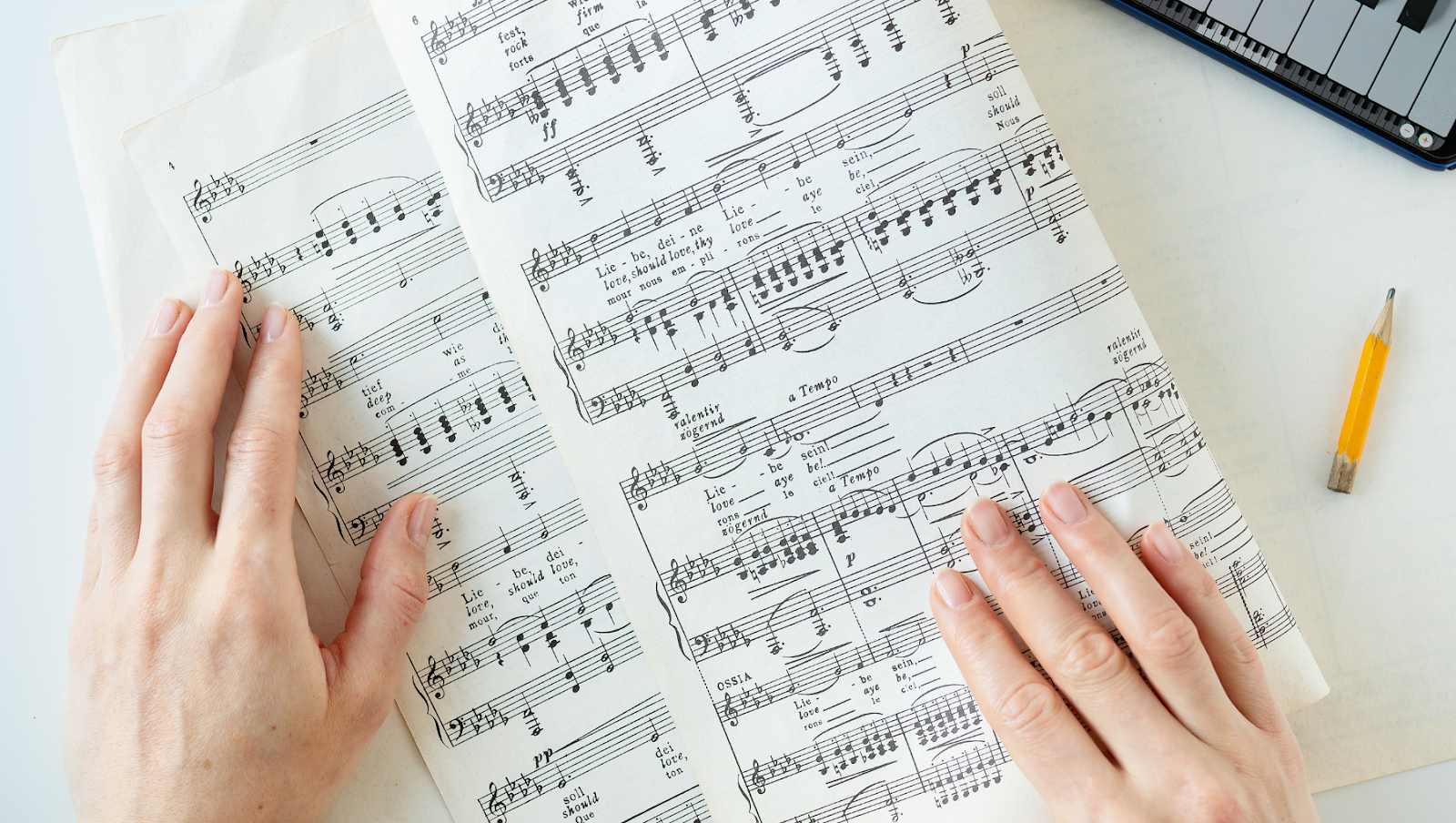
When you open a sheet music, one of the first things you notice, just to the right of the clef, are these sharps or flats aligned at the beginning of the staff. This is what we call "key signatures". But what exactly are they for? And how to interpret them on piano?
What is a Key Signature on Piano?
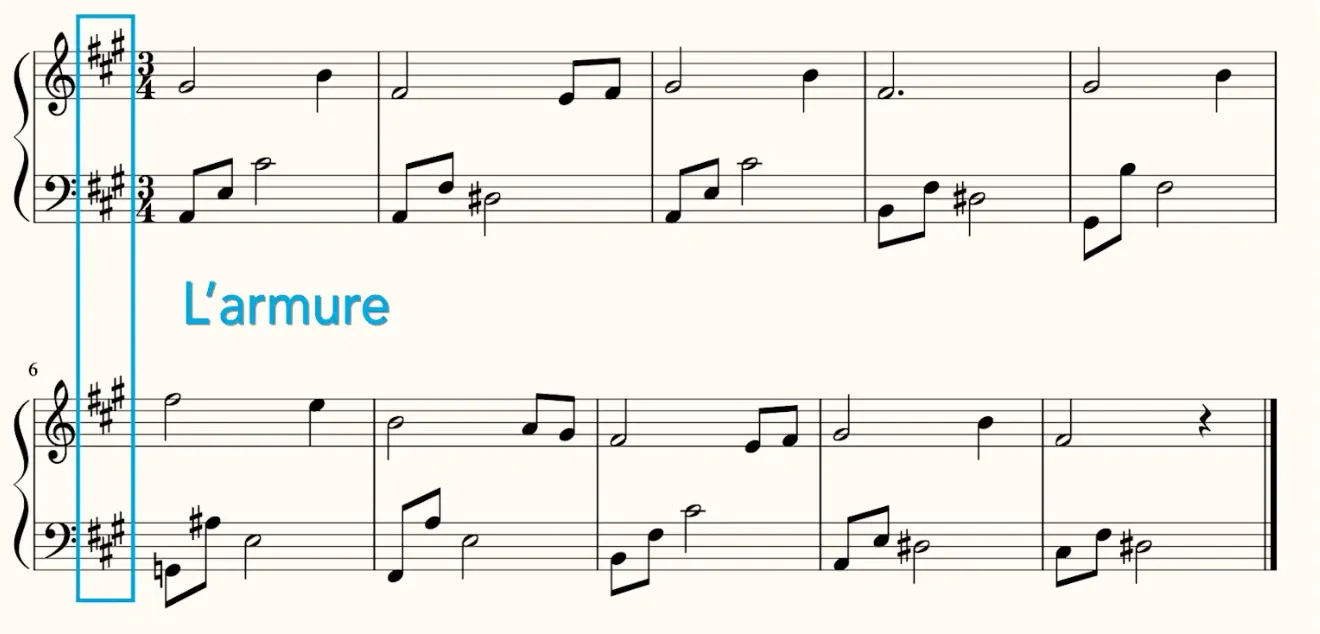
The key signature of a score is a set of symbols placed at the beginning of the staff that indicate whether certain notes should be played higher (sharps #) or lower (flats b). It serves to establish the tonality of the piece. The key signature is therefore a marker that facilitates reading and playing on piano.
How to Read a Key Signature?
The key signature consists of either sharps (#) or flats (b). Their number and position aren’t chosen randomly: they follow a precise order.
- The order of sharps: F - C - G - D - A - E - B
- The order of flats: B - E - A - D - G - C - F
The number of sharps or flats at the beginning of a score gives an indication of the “musical color” of the piece, which we call tonality. For example, if we see a single sharp (F#), it means the piece is either in G major (rather joyful) or in E minor (rather melancholic).
Why Are Key Signatures Important?
Identify the tonality of a piece The key signature allows you to quickly identify the main tonality of a score. This gives indications about the general atmosphere of the piece: major tonalities are often associated with joyful or bright atmospheres, while minor tonalities can be darker or nostalgic.
Facilitate reading and execution Instead of writing a sharp (#) or flat (b) each time a note needs to be modified, the key signature indicates it once and for all at the beginning of the score. This avoids repetitions and makes reading more fluid.
Anticipate modulations Some pieces change tonality during the course, we then speak of modulation. Knowing how to identify a key signature allows you to better understand and anticipate these harmonic changes.
How to Train to Recognize Key Signatures?
- Play the corresponding scales: Train yourself to play the major and minor scales associated with different key signatures to integrate them well.
- Observe scores: When looking at a score, try to determine its tonality before playing it.
- Do listening exercises: Try to associate a tonality with its sound atmosphere to better recognize it.
Conclusion
Understanding key signatures on piano means giving yourself a head start in reading and interpreting scores. By identifying at a glance the tonality of a piece, you’ll be able to better anticipate its playing and focus on interpretation rather than note-by-note reading.