· The Tokatab Team · Piano Glossary · 4 min to read
The Sustain Pedal (or Damper Pedal)
What is the sustain pedal? How does it work? How to use it? What are its main characteristics? What pitfalls to avoid? This article will tell you everything.
What is the Sustain Pedal?
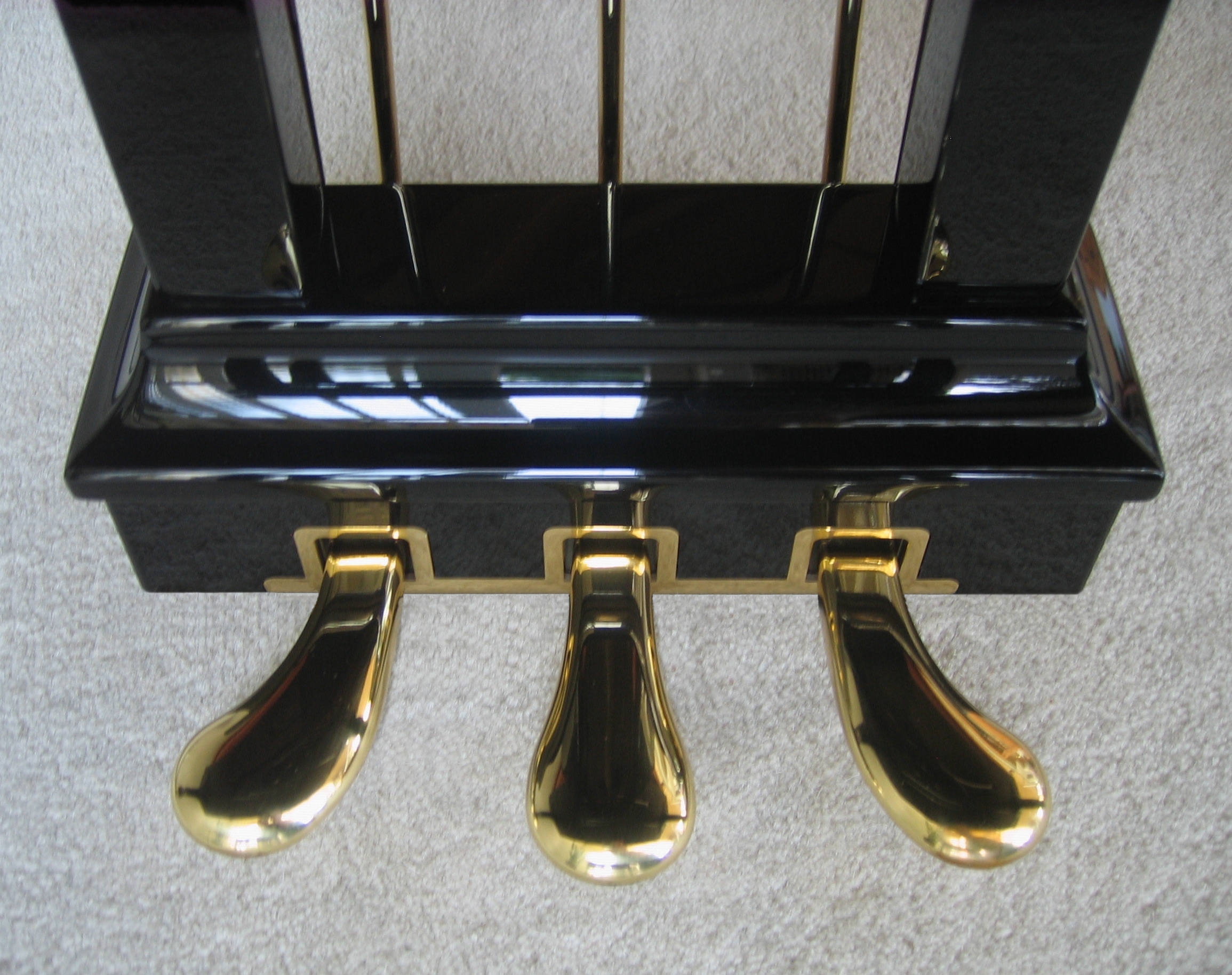
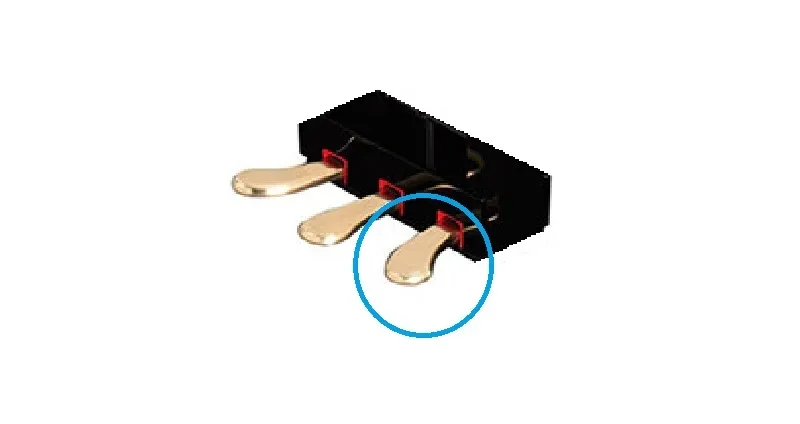
On an acoustic piano, the sustain pedal is the right pedal (generally the only pedal on digital pianos). It’s also called the “damper pedal”, or the “right pedal” or even the “forte pedal”. And if you encounter a pianist who talks to you about a “loud pedal” (which doesn’t really mean anything), they’re probably still talking about this famous sustain pedal…
On sheet music, the right pedal is represented by the sign Ped when to press it, and by this sign * (an asterisk) when to release it. We also sometimes find a horizontal bracket under the staff, indicating to press the pedal for the entire duration of the bracket.
How Does the Sustain Pedal Work?
When you press a piano key, the corresponding note is played: a mechanism inside the piano makes a small hammer strike the string (or strings, because most notes are in fact triggered by a set of 3 strings very close together) whose vibration produces the note. When you release the piano key, a felt-padded part called the damper comes to rest on the strings to stop their vibration and silence the note.
When you press the sustain pedal, all the dampers lift, allowing all the strings to resonate. The notes you play therefore continue to resonate when you release the key, hence the term “sustain”.
Moreover, the notes you don’t play also vibrate “in sympathy”, meaning that when you play for example a C, all the Cs of the piano will resonate, as well as all the notes of the C major scale; this produces harmonic richness, which is to some extent comparable to a reverb effect.
How is the Sustain Pedal Used?
Usually, the sustain pedal is pressed just after striking the note (or chord), to avoid too much overlap with the previous notes. You’ll see on the video below (thanks to the gradus piano channel, whose videos we enjoy) that sometimes the foot anticipates slightly, but most often releases and presses again the pedal just after a chord change.
In this example, the pedal is used for each chord change, and therefore very frequently; in other contexts (depending on the piece, the playing) the pedal will be used much more sparingly.
What are the Most Common Mistakes?
According to most piano teachers, the most common mistake that piano beginners make with the sustain pedal, is to use it too much… If you press the pedal all the time, you create a kind of sound “porridge”, since all the notes mingle together; the playing then lacks precision and dynamism. Some pieces are completely devoid of pedal markings on the sheet music precisely because the effect they create isn’t appropriate.
Also beware, at the beginning, of the position of your foot, which should rest on the pedal to be able to press it quickly. Avoid pressing the pedal “instinctively” to facilitate the playing of a difficult piece, in the very numerous cases where the fingering is at fault. The pedal won’t help you replace a good fingering technique! As a general rule, we advise you to become familiar with the sustain pedal a little late in your piano learning (unless the piece explicitly requires it), because it can constitute an additional mental burden (just as the bass/treble clef reading also requires becoming accustomed to) while you still have to familiarize yourself with your keyboard, master your fingerings, and develop your playing technique.
Good News: Digital Pianos Have a Simpler Sustain Pedal
On a digital piano, the sustain pedal is easier to use (it’s actually easier to learn piano on an electronic piano for this reason also) because it’s more forgiving. On an acoustic piano, there are in reality not two possible pedal positions (pressed/released), but rather a “continuous” pedal adjustment is possible (the more you depress it, the more the dampers move away from the strings, and the more the sound can resonate). It’s therefore possible to pedal “only a little” to leave more or less resonance; and therefore quite easy to pedal incorrectly and create a sound stew. On a digital piano on the other hand, in most cases, the pedal is either pressed, or released: the only two possibilities, making it easier to use.